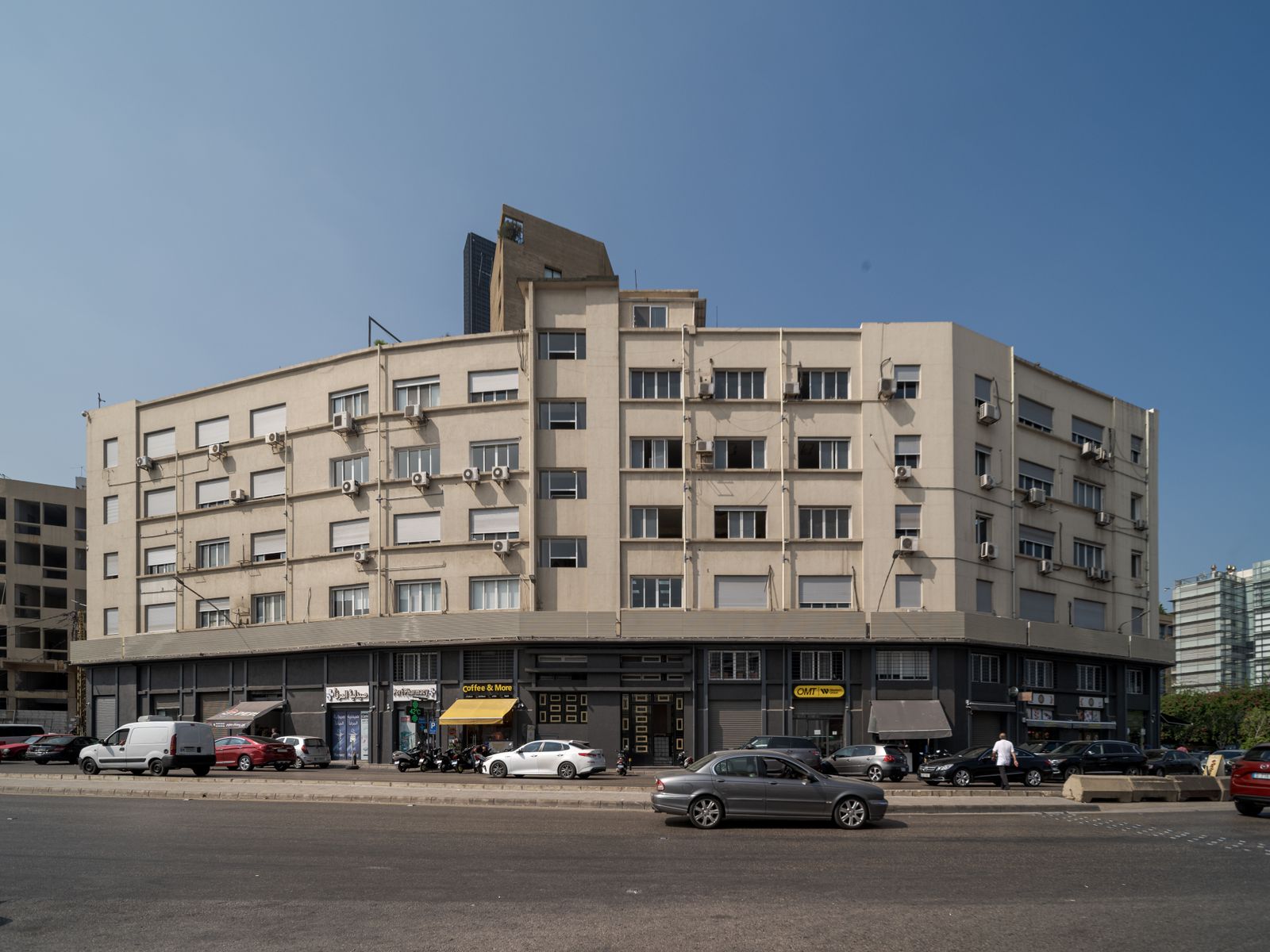
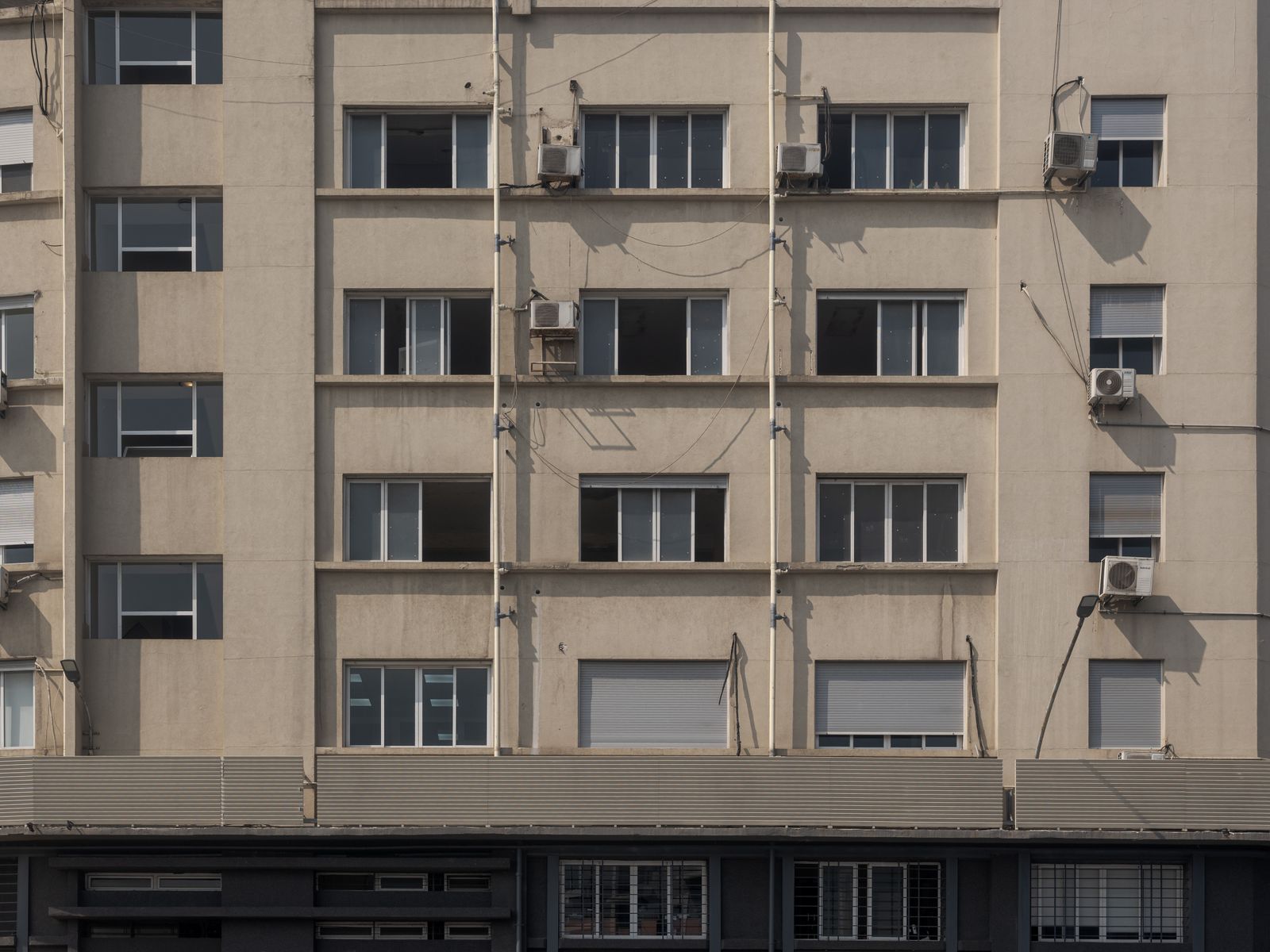
The Boulos Fayad Building, located in Beirut’s port district, is deeply connected to the city’s commercial and urban history. The plot was acquired in 1938 by Boulos Fayad, a construction-materials merchant, and the first warehouses and offices were built the following year by architect Fouad Kozah. Between 1952 and 1954, Albert Menassa completed the building with five additional floors of offices, whose tenants were, from the outset, largely connected to port-related activities. The building subsequently lived through many of Beirut’s major upheavals: the Second World War, the Lebanese Civil War—during which it stood on the demarcation line—and a threat of demolition in 1994, which it ultimately survived. From 2010 onward, the arrival of designers and creative practices in its former storage spaces gave the building a renewed cultural dimension while preserving its longstanding connection to the port. Severely damaged by the 4 August 2020 explosion, its concrete structure remained standing and the building quickly returned to activity. Today, the building remains firmly embedded in the port ecosystem, with more than 90% of its upper-floor tenants working in shipping, freight, customs, transport or import-export. This continuity between trade, circulation, memory and contemporary creation makes the Boulos Fayad Building a particularly resonant setting for Exportables, an exhibition that similarly considers objects conceived to travel, circulate and carry something of the place from which they originate.